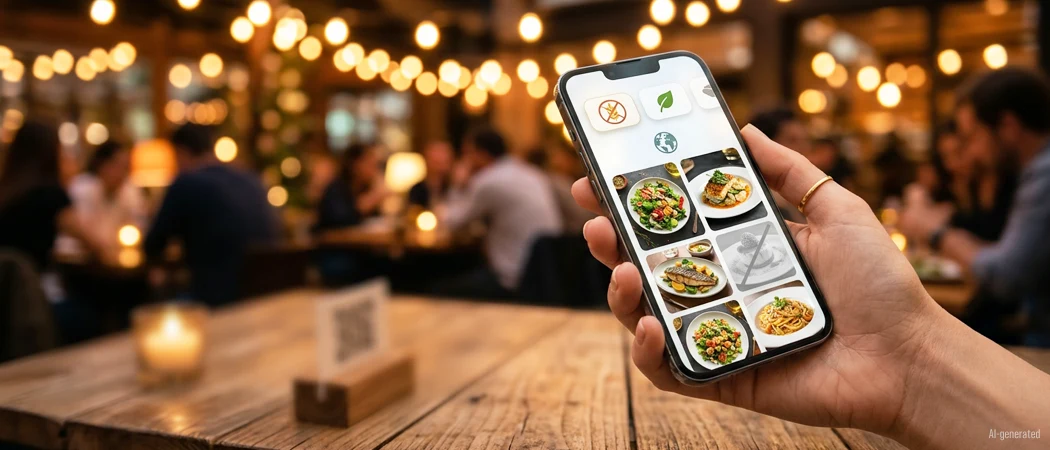
In short: The printed menu is not going away in 2027: 90 percent of the guests surveyed prefer paper over a QR code. Digital menus will still do more — ordering straight from the menu, multilingual versions driven by the browser language, real-time sold-out labels and filterable allergens. What decides the guest experience is whether the details on the menu are right, on paper and on screen.
Guests scan more often than they did three years ago — and still often wish they had a paper menu in hand. That is not a contradiction; it is what several large surveys keep finding. For 2027 it does not settle the question of digital versus printed. It raises a less comfortable one: whether the details on the menu are actually right, on paper and on screen.
What the numbers show
The clearest survey comes from the United States. US Foods asked more than 1,000 people about how they eat out. On menus the result is unambiguous: 90 percent prefer printed menus over QR codes, up from 74 percent a year earlier. The rise runs through every age group — baby boomers from 86 to 95 percent, Gen Z from 69 to 90 percent.
People scan anyway. Ipsos recorded that 65 percent of Americans had already opened a digital menu by QR code. In the same survey, 58 percent of users say they would like to go back to paper, and only 39 percent hope QR usage keeps growing.
For the German market, a Lightspeed survey paints a similar picture: around 43 percent of guests use QR codes when they are offered, but only about 10 percent prefer them. More than 35 percent ask for a printed menu when QR is the only option, and in fine dining the preference for paper is above 90 percent.
Three surveys, three markets, one pattern: use is widespread, preference is low. Reading that as the failure of digital menus gets the numbers wrong. Reading it as paper becoming unnecessary gets them just as wrong.
Why usage and preference drift apart
A QR code is an entrance, not a replacement. Putting one on the table and taking the printed menus away sells a convenience as an obligation. That is exactly the difference the research shows: what guests reject is less the digital format than the situation in which it is the only option.
A paper in the Journal of Hospitality and Tourism Management concludes that QR menus weaken customer loyalty because the interaction is perceived as inconvenient. A further consumer survey points the same way: 47 percent said they were not comfortable using QR codes in restaurants, rising to 65 percent among those aged 60 and over. That is not hostility to technology — it is the difference between "I may choose" and "I must".
The two formats simply do different jobs. On paper you leaf through, compare, let yourself drift — that is part of the evening. On a screen you search: for the dish, the allergen, the vegetarian option. Offering both serves two situations. Offering one decides on the guest's behalf.
What actually changes in 2027
What follows is a forecast, not a measurement. It rests on features already in use in 2026 and on the direction vendors are building in. Certainty about 2027 will only arrive in 2028.
Ordering becomes part of the menu
The menu stops merely informing. In more and more venues the scan leads not just to the menu but to an order passed to the kitchen. The real effect is not the technology but the relief at peak times: guests order when they have decided, not when someone walks past.
Multilingual becomes automatic
A multilingual menu used to be a project. It is turning into a setting: the menu reads the browser language and serves the matching version. For venues in cities with many international guests, that is the point where the effort pays back — one menu, many languages, one source.
Sold out appears in real time
The classic at eight in the evening: a guest orders what has been gone since seven. A sold-out label on the digital menu solves it without a shout from the kitchen. A small feature with a large effect — it lands exactly in the moment a guest would otherwise be disappointed.
Allergens become filterable
Labelling has been mandatory for years; what is new is usability. Instead of reading a list in small print, guests filter for "gluten free" or "vegan". This is where digital menus are factually ahead of paper — not in looks, but in findability. The details are in the glossary entry on the allergen filter.
Personalised recommendations are being tested right now. For 2027 they are not standard, and for most venues they are not a decision that is due: anyone who keeps the menu current has already achieved the bigger effect.
What that means for your menu
The numbers do not call for a technology project. They call for an order of operations. Four steps, in this sequence:
1. One source of truth
Decide which file is the valid menu. If the PDF, the website and the printed card hold three different versions, the mistake does not start in the digital layer — it starts earlier. A PDF you maintain yourself is enough; nobody has to redesign anything. How that works without design software is shown by the PDF upload.
2. Paper stays in the game
Preference for printed menus has not fallen in these surveys; it has risen. Dropping paper saves printing costs and costs a piece of hospitality. The pragmatic combination is paper for the evening and digital for everything that changes — the pattern behind a paper menu on request.
3. QR as an entrance, not a replacement
The code belongs on the table where it is visible — as a second route, not the only one. Anyone who puts it up and removes the printed cards repeats the mistake of 2021, when many venues dropped the printed menu altogether — this time with measurable consequences for satisfaction.
4. One channel for every change
A price change, a new season, a dish that has run out: every change needs exactly one place where it happens and one route by which it reaches everywhere. Maintain two routes and you will soon have two versions.
The bottom line
Digital menus will do more in 2027 than they do today — and they will not replace the printed menu. Whoever offers both and keeps the details current wins in both worlds. The argument about the format is the wrong one anyway: guests are not bothered by the QR code, they are bothered by a menu that is wrong.
Figures from: US Foods Diner Dispatch, Ipsos Consumer Tracker, Lightspeed survey on the DACH market, Journal of Hospitality and Tourism Management.